Thank you and good night.
I’ve run out of time to write properly and my interests have evolved from when I started this blog/
My interest in Naxalism hasn’t disappeared. I still consider the Maoist insurgency in India to be one of the seminal challenges of the 21st Century. My thinking and my ideas have, however, moved beyond Naxalwar. Started in 2008, nearly four years have passed. I’d like to thank all of the people who have read and commented on my work here. I’ve learned a lot from you and I appreciate the interest of those who haven’t contacted me. Thank you.
I’m off to Chhattisgarh and West Bengal next month. I may or may not start a blog with field comments. The form and content would be very different.
Until then, thank you and good night.
Italian Nationals Kidnapped
My blog’s received a spike of visitors from IP and I think it’s safe to say that this story is the reason:
Italy ‘hopeful’ India Maoists will free two tourists
Italian Consul General Joel Melchiori is “hopeful” that two Italians kidnapped on Saturday in the Indian state of Orissa would be released.
This is a worrying development for ‘outsiders’ interested in the Maoist conflict in India. The Naxalites have never before targeted foreigners. They generally avoid them. They (mostly) refuse to meet with foreign journalists and academics and do not target tourists
Whether this recent kidnapping represents a change in Maoist strategy or a one off action linked with the specific activities of the two kidnapped men is unclear.
For those Italians who have visited my blog in recent days, I wish a speedy release of the hostages and a pacific resolution. I also hope (more selfishly) that this is not a new Maoist strategy borne of their recent strategic setbacks.
Reflections
I love India. This is why I write this blog and this is (mostly) why I chose to leave up a career in development for the poverty of student life. I’ve had to remind myself of this week. Writing a PhD is tedious. It’s the same shit over and over: sit, read, write. Repeat ad nauseam.
I now have date for when I’ll be going to the country to do my fieldwork. I’ll be there after the monsoons in mid-June.
Studying Naxalism is a study of India’s failures. Academia, at its best, is rooted in criticism: speaking truth to power (the court advisors and ‘public intellectuals’ who turn this on its head are, I suppose, academic in their own way). This is the ethic that informs my work.
The risk is that this can lead to a self-defeating cynicism and nihilism that misses the point of intellectual work. Work that should (in its humble way) contribute to making the world a better place.
I haven’t been to India since 2008. I’ve begun to forget why it is that I’m doing what it is I’m doing and need to remind myself of why it is I care about what I do. I care because India has been good to me.
I first went there in 2002. I’d landed a post-undergraduate paid internship in South Africa with the Canadian Co-operative Association (CCA). Three days before I was to fly to Jo’burg, I was caught up in a police investigation. 300 blank passports had been stolen from the office in which my (then) girlfriend worked. The two of us were sucked into the ridiculous vortex of a post-9/11 investigation – an investigation that was both absurd and incompetent.
Within 10 months we were both ‘cleared’, but, I had been prevented from leaving the country and the internship had collapsed. The organization I was to work for, the National Co-operative Alliance of South Africa, had fallen victim to the acrimonious, ‘winner-take-all’ politics of post-Apartheid.
CCA did their best to find something else for me. They had done some work in the past with the International Co-operative Alliance in Delhi and decided to send me to India.. I wasn’t at all interested. All that I ‘knew’ about India I had learned from Indian Jones and the Temple of Doom (human sacrifice, famine, eating eye ball soup). I had no interest in the country.
My first memories of the country are landing in Delhi on a cold and foggy January night. I remember feeling smothered by the charcoal braziers of the arrivals terminal, chaos and the drive to the hotel. It was a particularly cold winter and there were fires burning by the side.
Not an auspicious beginning. But it was a beginning. Within a few weeks of being in the country my ‘interest’ (this is what it was at first) grew. During my internship I spent more time in the field than I did in the office. From Himachal Pradesh, to Rajasthan, to Bombay to coastal Andhra Pradesh. I had the privilege of travelling across a large part of the country. While my work there wasn’t of much value (NGO work often isn’t), it did make me fall in love with the country.
I’ve worked in India a number of times since my first visit. I’ve met brilliant people, some of who became my friends, some of whom I had the privilege of only meeting once.
I was once (jokingly) told by a friend of mine from Chennai who I lived with in London that I was an Indophile. I am. And I don’t apologize for it. This is who I am and this why I do what I do.
In the spirit of the Pillowbook of Sei Shonagan (but with far less skill), here are a some thoughts:
I like the way that the sun rises above the peaks of the passes into Ladakh on a crisp winter morning.
I like the damp smell of death and life after the rains in Kerala.
I like seekh kebabs. I like the beef ones my friend took me to eat in Nizamudin. They were secret, like buying drugs.
I like the ones I ate too many of too often on the street by my house.
I like the ones my Tamil friend drove me to on the way back to Chennai.
I didn’t like the ones at the Afghani place so much but the beer was good.
I like the blast of heat while riding a camel in the Thar Desert.
I like the moon over Jodhpur.
I like wondering through the streets of Pondicherry and finding a good baguette.
I like going to festivals in Goa at two in the morning and throwing coconuts at a large chariots pulled by dozens of people.
I like drinking beer until late at night in Chennai with friends. Getting more from a ‘secret’ liquor shop on motorcycle and then listening to my friends argue about caste, history, meaning.
I like shopping in creaky old bookshops where all of the books are covered in plastic, but there are so many of them
I like riding a bike on the East Coast Road.
I like meeting strangers who want to practice their English and invite me to their mother’s house in a town where I don’t know anyone
I like my friends.
I could write on, but I have to stop somewhere. I look forward to more time spent in India.
Indian Forest Cover
A recent story is making the rounds on twitter. From the Indian Express:
Survey blames Naxals for decline in forest cover
India’s overall forest cover has declined by 367 sq-kms in the past two years despite a few states actually expanding their forest areas. The net loss is mainly on account of Naxalites destroying close to 200 sq-km of forests in Andhra Pradesh, a government report said in Tuesday
I wanted to respond to the ‘survey’, but googling it only led me nearly identical articles in all of the other Indian English papers. For example, there was this in the Hindu.
My recent work has been looking at state expansion into adivasi areas and how this expansion has been structured around forest ‘protection’. Naturally, this piece caught my interest. On the surface, it seems like a psychological anti-Naxalite move on the part of the government (as it’s difficult to believe that the Maoists can be blamed for deforestation in any significant way). But, I can neither find the report nor do the various articles provide a link to the journalist who wrote the piece. Curious.
If any reader knows more, I’d be grateful to hear from them. Inquiring minds want to know. Please email me. michaelspacek@gmail.com
UPDATE:
I’d like to thank the people behind http://naxalrevolution.blogspot.com/ for the email I received this morning. They sent me a copy of the report: http://www.fsi.org.in/sfr_2011.htm
I’ll take a look at it and post my response this weekend.
The Last Hurrah?
I received an apt comment on this blog from Andrew Gibbons last December:
This site seems to have become India’s forgotten blog.
Andrew has a point. During the previous year and a half, I haven’t written anything of note on NaxalWar. Aside from laziness, I blame my academic work.
The blog has suffered because of the kind of writing I have to do. A PhD requires that I write things that are ‘publishable’ and the conventions of academia are formal. Blogging (at least when done well) is somewhere between formal writing and ranting. Finding this balance has become harder.
Two things have happened. First, the old aphorism that the more you know the more you realize that you don’t know has smacked me in the head. Much of what I have written on this blog I wouldn’t write now. The more I read about the Maoist affected areas, the less certain I am about my conclusions. The insurgeny is complex as hell and my thinking has become less certain.
Second, my work is now at the stage where I feel as I have little to say until I get into the field. I started this blog largely because I felt (and still feel) that most of what is written about the Maoists is shallow, superficial and unthinkingly ideological. What often passes for journalism, think tank ‘insights’ and academic work is, if I were being generous, crap. It’s often worse than crap, it’s dangerous. It’s dangerous because the ‘story’ which most journalists, academics and ‘experts’ tell leads to policies that are not only ineffectual and counter-productive, but are brutal and destructive.
Many people writing about the Naxalites don’t know what it is they’re talking about. The story of the insurgency is a human story with real human consequences. The work of ‘experts’ sitting in Delhi, Bombay or London often tell us more about their deadlines than they do about the conflict.
I’ve reached a point where I feel I have very little to say until I do my fieldwork. I’ve toyed with the idea of archiving this blog and starting a new one that I could use for my thoughts, musings and observations from the field. I dunno… I haven’t yet decided whether to shut NaxalWar down or turn it into something new.
Before I make a decision, however, there will be at least one more post. While sitting at a pub this afternoon– me. a pint and The Economist– I read an article about Indian energy needs, an article that is screaming for a response. And after that, who knows. Perhaps NaxalWar is merely moribund, perhaps it’s dead. I haven’t yet decided.
World Politics Review
It’s a bit lazy, but here is some of my most recent thinking on Naxalism. It was published a few weeks back in a really solid up and coming policy mag World Politics Review. It’s behind a firewall, but they offer a trial subscription. Check it out:
http://www.worldpoliticsreview.com/articles/7948/indias-enduring-naxalite-insurgency
Overlapping Connections and Complex Ties
 One of the most interesting elements of the Maoist insurgency is the complex relationships between the various actors. This is not an insurgency that can easily be understood as a battle between an armed anti-state group fighting the government. Naxalism makes for strange bedfellows. One of the strangest is the link between the Trinamool Congress and the CPI(Maoist). While there have long been rumours of an alliance, the latest evidence is particularly damning:
Causing serious embarrassment to the Trinamool Congress leadership, party MP Kabir Suman has written an autobiography and dedicated it to top Maoist leader Kishenji among others.
The book, titled ‘Nishaner Naam Tapasi Malik’, has an eye-witness account of a meeting held in the office of the Trinamool Congress between party supremo Mamata Banerjee and Maoist leaders Raja Sarkhel and Prasun Chhattapadhyay, who are currently in jail under the Unlawful Activities (Prevention) Act.
While Kabir Suman is no longer a member of Trinamool, there have been no suggestions (as far as I know) that these revelations are false. Mamata Banerjee is not only the leader of the party, she is also a minister in the central government. In effect, a senior member of a government engaged in a large counter-insurgency operation is a tactical ally of the insurgents. Her party, a member of the governing coalition, also has ongoing operational linkages with the Maoists. Bizarre.
And this isn’t all. One of the most intense theatres of conflict is in West Bengal where the ruling Communist Party of India (Marxist) government is engaged in an increasingly ferocious and indiscriminate turf war with the Maoists. The Forward Bloc, one of the CPI(M)’s governing coalition partners is also sympathetic towards the Maoists:
Forward Bloc is known to be a “silent sympathiser” of the Maoists as it had opposed the joint operations in Lalgarh despite being a partner of the Left Front. It also criticised the imposition of Unlawful Activities Prevention Act (UAPA) on the Maoists in West Bengal.
And in neighbouring Jharkhand, another hotbed of insurgency, the former (and still influential) Chief Minister apparently also believes that the Naxalites are a people’s movement worthy of support. In late December he was asked whether:
deployment of joint forces has been causing problems to tribals, Soren said:
“If the government thinks force is necessary to restore the law and order, it’s fine with me. But at the same time, it has to be ensured that the force is not used for the benefit of some party.”
His observation comes in the wake of Jharkhand Deputy Chief Minister Hemant Soren’s assertion that he was in favour of the withdrawal of Central forces from Naxal-hit areas because he had information that the forces have been helping the CPM to control the sanitised area.
In effect, the former CM and the current Deputy CM of Jharkhand have allied themselves with the Trinamool and the Maoists against the CPI(M).
If this is making your head hurt, you’re not the only one. Such Byzantine alliances exist not only been political parties and the rebels. They also exist between business and the Naxalites. The mineral rich areas of the country are partly governed and regulated through a mutually beneficial collaborative relationship between large mineral extracting ‘capitalists’ and the communist rebels. Of course the losers in all of these machinations are the local people.
Oh. But I forgot. It’s Binayak Sen who is guilty of sedition.
India’s Prisoner of Conscience
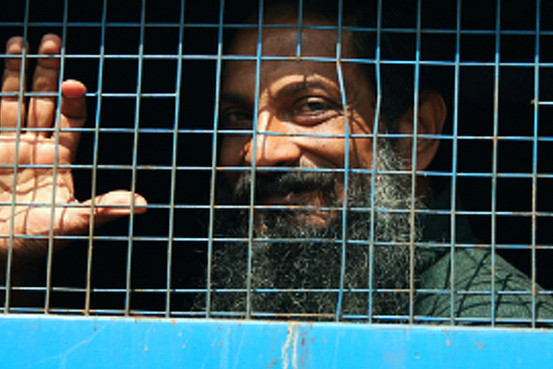 On 24 December Dr. Binayak Sen,vice-president of the People’s Union for Civil Liberties, was sentenced to life imprisonment by the Raipur Sessions’ Court for his violations of the draconian Chhattisgarh Special Public Security Act 2005 and the Unlawful Activities (Prevention) Act 1967. A full English translation of the judgement can be found here.
According to the Indian Express the court found Sen guilty of ‘helping’ the Naxalites and therefore guilty of sedition. The cited the following ‘evidence’:
Sen’s meetings with jailed Naxalite leader Narayan Sanyal; his attempt to pass on three letters written by Sanyal to unspecified people in Kolkata; and his helping some “hardcore Naxalites” to open bank accounts, get jobs and rented accommodation.Also cited as evidence is the recovery from Sen of newspaper clippings on the Naxal movement and a magazine with interviews of Naxal leaders Ganapati and Kishenji. The verdict is silent on which specific Naxal act or conspiracy Sen was involved in.
This is a judicial injustice entirely unbefitting a democratic state. There should be no tolerance in India for laws as draconian and vague as either of the acts under which Dr. Sen has been convicted. The verdict has been fiercely denounced both domestically and internationally.
The PUCL and Dr. Sen have been fierce critics of the government’s policies and actions towards the adivasi and this is why they have been targeted in a campaign of judicial harassment. Unlike the adivasi of Bastar, Dr. Sen is too prominent to simply kill (or ‘encounter’). Hence the draconian sentencing under a draconian law. The PUCL is one of the few relatively impartial organizations with outside contacts working in the region. They can tell the world what is actually happening on the ground. They are a threat to the local warlords of Dantewara and their friends and allies in Raipur.
The absurdity of the verdict and the law is clear. In effect, the Chhattisgarh Special Public Security Act criminalizes all contact and association with the Maoists. The Maoists control much of the state. ‘Associating’ with them is inevitable for those individuals and groups who wish to do work in the region outside of official channels. In effect, the law ensures that the only story that is told about what happens in Bastar is filtered through the channels such as the Salwa Judum and the government sanctioned warlords who represent the state.
An excellent piece on the injustice of the case can be found here. Of particular note is this quote:
All through 2006, Dr Sen and the state PUCL were in the news for criticising the new Chhattisgarh Special Public Security Act and exposing fake encounters. In April 2007, the Chhattisgarh PUCL held its state-level convention on the theme: ‘Fake Encounters, fake surrenders and fake cases’.
On May 9, then state president Rajendra Sail [ Get Quote ] announced the PUCL’s decision to intervene in the petition filed by the wife of a Naxalite who alleged that her husband had been killed in a fake encounter in front of her and she had been raped.
This, in short, is the reason Dr Sen was arrested and implicated. In a state where the Maoists were gaining support from the Adivasis whom the government has forgotten, but whose lands it is eyeing, the Maoists had to be eliminated.
This is the crux of the matter. The war being fought in southern Chhattisgarh is dirty and brutal. The government has outsourced its counterinsurgency and ‘governance’ functions to a group of warlords which emerged from Salwa Judum. Dr. Sen and the PUCL are a threat to the impunity and brutality of the local anti-Maoist forces and needed to be silenced. I hope that the Indian system will not allow this decision to stand.
2010 Roundup
I’ve learned from experience that at this period in my life I should not make promises to my readers which I can’t keep. My posts in the past six months have been extremely erratic. My academic and professional life doesn’t currently give me the time to consistently post with the same intensity as I could in the first years of Naxalwar. No more promises of ending a hiatus. I will only say that I hope to post when I have something to say and the time to say it.
One of the reasons for the paucity of postings has certainly not been a lack of things to write about. 2010 was the bloodiest year in the history of the Maoist insurgency. 1,169 people died last year according to the government. While civilians continue to make up a disproportionate number of fatalities, the security forces have also not done very well. According to the Indian Express:
The Naxalite groups also enjoyed the upper hand vis-a-vis the security forces in terms of the number of people lost in the battle. The security forces lost 285 personnel, as compared to 317 in 2009 while the casualties on the Naxalites’ side was only 171, again significantly less than 219 in the previous year.
In spite of Green Hunt and the insertion of 60,000 CRPF personnel into the Maoist affected states (roughly evenly split between combat and support staff), the government has not been capable of establishing anything even remotely approaching tactical or strategic dominance.
It seems that 2011 will be more of the same: an unthinking counter-insurgency strategy rooted in the belief that poring greater and greater numbers of poorly trained and motivated paramilitary police forces into central and eastern India will somehow eliminate the ‘Naxal Menace’. It won’t. Nor will the funding of development programmes that are often little more than thinly veiled schemes to further enrich local notables and those forces responsible for the alienation of the adivasi from their land. What is required is political bravery- negotiation without condition. Only when the shooting stops can the government start thinking of the way in which it can begin to fundamentally transform its historically mal-governed hinterland.
Unfortunately, what we are getting is more of what was just announced:
Battling rising Maoist militancy, the Chhattisgarh governmenthas decided to add another 2,400 special police officers (SPOs) to be drawn from local youths to combat the guerrillas.
This will nearly double the number of SPOs in Bastar. More cannon fodder for the CRPF and more intra-tribal violence. Depressing.
 Michael
 INDIA'S FORGOTTEN WAR - blogging naxalism.
The Economist, Lazy Journalism and Brutality (or why I fell out of love after getting smacked in the face)
leave a comment »
I read a piece in the Economist that irritated me. It was about India’s energy future. Let me start with a premise. I love the Economist. I love its liberalism, sarcasm and sensible moderation. I’ve gone so far as subscribing, reading it in hard copy in spite of the fact that I have an e-reader and am otherwise 21st century.
I look forward to Monday mornings when I get the ‘paper’ (as they, oddly, call themselves) in my mailbox. My love for the magazine is best expressed in a Seussian poem:
I read it on the train.
I read it on the plane.
I read it on the bus.
I read it with no fuss.
I read it before bed.
I read it for what’s said.
But this I won’t forget.
Why would I be upset?
Why would I be upset….
I opened my letterbox on Monday, put the magazine down with the intention of opening it when I had some free time. This afternoon I had a pint and sat down to read. An article drove me to blog.- I saw that someone had penned something called: “The future is black: Power is essential for India’s long-term growth. But electricity is unlikely to flow fast enough.”
What is the author saying? He/she is making the claim that India, as an emerging economic power, has increasing energy needs. Fair enough.
He/she is also making the point that India’s energy capacity falls far short of demand. Anyone who has spent time in Delhi, Bombay or anywhere else in the country, for that matter, knows this is a problem. Brownouts are all too common.
He/she then makes the point that India has explored numerous energy possibilities, ranging from nuclear power (not working because of ‘hostility from states and popular groups) to oil (promising, but reserves unlikely to3 be sufficient to meet growing demand). Ok. That makes sense. So, that leads to the following conclusion: coal is the way forward.
Why do I have problem with it? It’s lazy journalism. But, it’s more than that. It’s lazy journalism that could have adverse consequences for the people who live in India’s Maoist affected areas. The powerful may not be the average reader of the Economist, but the powerful do read the Economist. What their writers’ write has real world consequences. When they write dangerous and lazy crap, this is a problem.
As the Economist points out,reliance on fossil fuel is a problem. There are environmental risks from the use of coal, and fossil fuels in general. But, as the piece suggests, who are we in the West to deny countries like China and India the right to develop and reap the bounty of modern society as we have done for some time? I couldn’t agree more.
What is stopping India from tapping into the energy resources it needs for it’s growth? It’s the state, of course:
Ok. So now, the problem is reduced to a state monopoly. I’m not defending Coal India. They are probably as inefficient and bureaucratic as most corporate entities that the government in India runs. I get it. Is that really the problem?
Recently I read a piece by Kathy Le Mons Walker entitled, “Neoliberalism On The Ground In Rural India: Predatory Growth, Agrarian Crisis, Internal Colonization, And The Intensification of Class Struggle” (I can’t link to it as it’s a journal piece and access is restricted. For those of you who might be interested it’s in the Journal of Peasant Studies October 2008). Her argument is that India’s pattern of growth is displacing populations at a similar rate to that of China. The difference is that China is specializing in industrial production while India is specializing in service industries. Service industries cannot absorb as many people as consumer product industries and therefore, the logic of Indian development is genocidal.
While I don’t share her Marxist pessimism (nor do I share her worldview), I do wonder if she has a point. The coal reserves that India ‘needs’ in order to ‘develop’ are in areas populated by aidvasi. And what is happening in the adivasi areas right now is a resource war. India needs the coal. People live on top of the coal. There are also angry people with guns preventing you from getting the coal. In short, there are problems that go beyond Coal India.
For the Economist, however, this doesn’t matter. It’s incidental. Unlike real journalism (say, I dunno… this piece from Scotty Carney and Jason Miklian), the magazine (or this ‘paper’, as they would) sees the problem as one of state industries. When it comes to actual people, well, hell, it’s a problem that can be summed up with this:
They don’t have a magic wand! What to do? But, according to The Economist, pesky villagers are incidental. They can be compensated. Lets ignore the fact that over 100,000 people have been displaced in India because of development, over 70% of those being adivasi. Let’s also ignore the fact that ‘compensation’, when there is any (and there usually isn’t) usually takes the form of meagre lump sumps. But (says the company and I’ll even pretend a quote from ‘the company’ rather than a particular source isn’t, umm… lazy), they have a problem bigger than GEOLOGY! They have VILLAGERS. Incidental. Coal India is the problem.
Of course, there Maoists are preventing business from mining the coal as well (I wonder if this too is a problem even bigger than Geology). The Economist recongises this with one line in a three page article:
As with the local populace, the Maoists are incidental to the problem Indian development and coal extraction. After all, there is Coal India.
The Maoists are not incidental. Nor are the adivasi. Until the government recognisez that something is going on, that these areas that they’d like to exploit are populated by human beings who may not like the state very much, they have a problem. The Maoists are a symptom of the relations between India and the local population. Maybe relations between India and her indigenous people have a tragic dimension that can only be resolved through violence. If that’s what is necessary to resolve India’s resource dilemma, at least have the decency to not write the indigenous out of the story. Don’t wave a magic wand that turns what is actually going on in India’s land of coal to a problem of corporate organization with ‘villagers’ and ‘Maoists’ becoming an incidental problem. Not only is this lazy, it’s dangerous.
The Economist wrote a story about coal that doesn’t talk about the place where the coal is. Badly done.
Written by Michael
January 25, 2012 at 5:23 pm
Posted in Maoists, Naxalism
Tagged with Commentary, India, Insurgency, Maoists, Naxalism, Naxalite, War